As dawn lights up the streets of Meizhou, the golden roofs of the Forbidden City also glow with radiance. Executive Chinese Chef James Wang (王春增) of Zijin Mansion at Waldorf Astoria Beijing takes the abundant local bounty and intangible cultural heritage of his hometown – Meizhou’s “seven counties and one district” – as his palette and brush, presenting “Shi Zhao(食朝) – A Hakka Morning Ritual.” This morning feast extends Zijin Mansion’s culinary philosophy of “Hakka Soul, Zijin Taste,” blending the Hakka’s long‑cherished morning rituals with the refined craftsmanship of Zijin Mansion.
Hakka wisdom is crystallized in their unique language and in every meal of the day. In the Hakka dialect, having breakfast is called “Shi Zhao” – two simple syllables that paint a picture of the Hakka people rising, eating, and working with the sun rising. Chef Wang brings Meizhou’s understanding of “Shi Zhao” together with the region’s local gifts and intangible cultural heritage into this experience, fully expressing the Hakka philosophy of “living in the mountains, eating with the seasons.” Every spoon and chopstick become a taste of living culture.
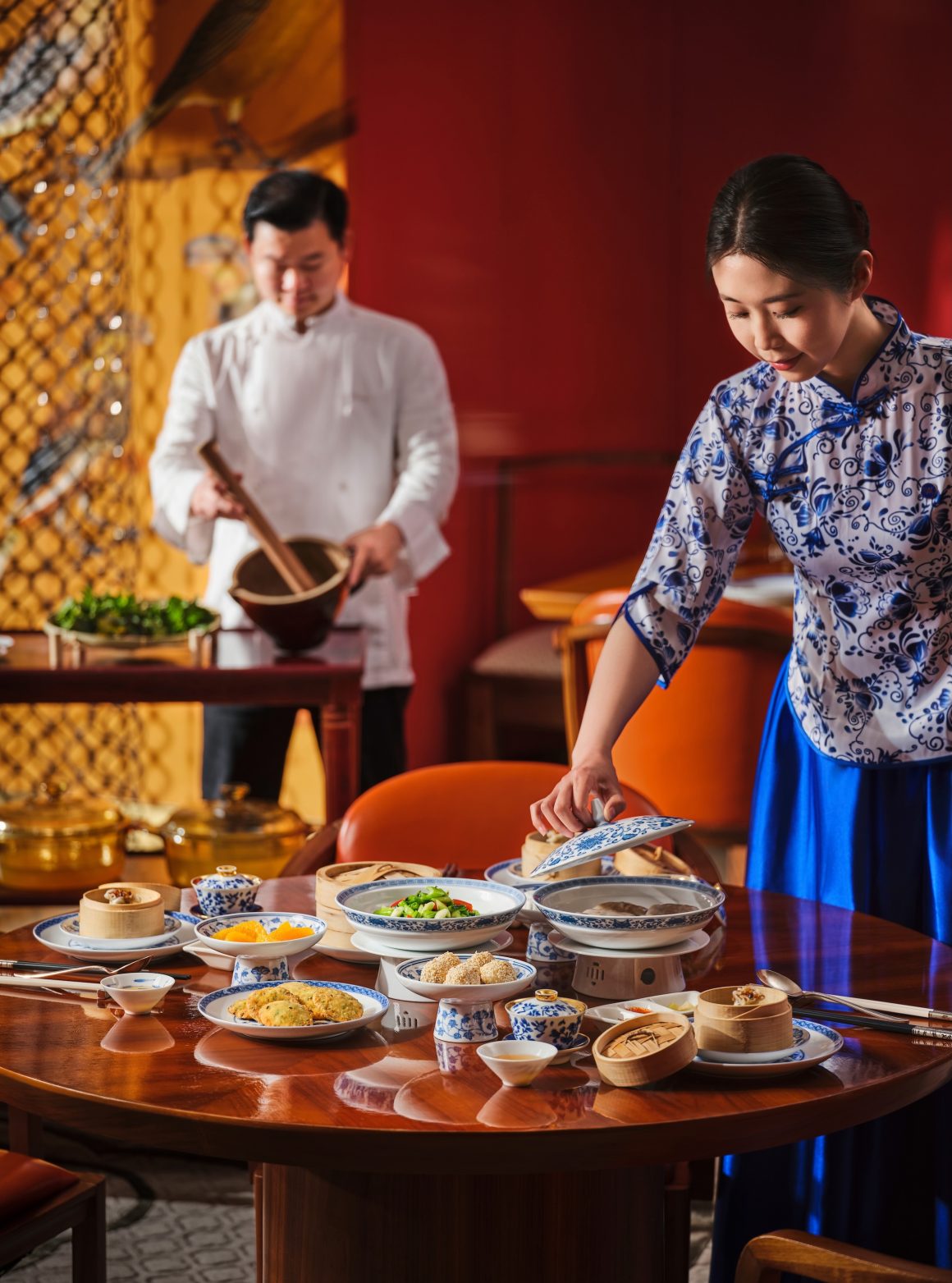
The experience begins with the rhythmic grinding of Hakka Lei Cha (pounded tea). Tea leaves, sesame seeds, purple perilla, and other Hakka‑loved ingredients are blended in a mortar, creating a rich, aromatic welcoming tea. This tea’s origins can be traced back to the Han and Tang dynasties; it was preserved intact during the Hakka’s southward migration and is hailed as a “living fossil” of Chinese tea culture. It is not just a tea, but a ritual of hospitality – the cultural overture of this culinary journey.
Accompanying the entire journey is a flavorful footnote that lights up the Hakka dining table: Zijin Sauce, fermented from local garlic and spices – savory and aromatic; homemade XO mushroom sauce – rich and umami; Fengshun salted vegetables – tangy and appetizing, a daily homemade pickle of the Hakka. These dipping sauces offer multiple expressions of Hakka flavor at Zijin Mansion and provide endless possibilities for the main courses that follow.
As the experience deepens, the specialities of Meizhou’s seven counties and one district appear in turn:
Fengshun Kun Ban combines Chaoshan and Hakka culinary cultures – the soft, chewy rice skin of Chaoshan and the savory filling of Hakka. Meijiang Shumai, a district‑level intangible cultural heritage, features thin, translucent wrappers filled with fresh bamboo shoots and shiitake mushrooms – a vivid expression of Hakka’s “fresh ingredients first”philosophy. Jiaoling Sanjidi Soup – fresh pork offal simply blanched in Rich Savory Broth, with a light red hue from Hakka red yeast rice, symbolizing prosperity and aiding digestion.
The highlight of the experience is undoubtedly Meizhou Yan Mian (mixed noodles). In Hakka, “Yan” means mixing with warmth – lard, fish sauce, golden garlic, and fine local alkaline noodles quickly tossed together, releasing an irresistible fragrance. The pairing of Yan Mian with Sanjidi soup is synonymous with breakfast in Meizhou, and its making has been inscribed as a Meizhou municipal intangible cultural heritage. For a lighter option, Yan Mifen (rice noodles) offers a refreshing alternative.
Other specialties include:
Dabu Lao Hu Ban, an upgrade of traditional Lao Shu Ban (rice noodles) with the addition of tiger grouper meat, adding freshness and a playful homophonic name;
Meixian Zha Qiao Ban, made with fresh Chinese Shallots, embodying Hakka’s “eat with the season” wisdom;
Hakka Shui Lu Cai stir‑fried with garlic shoots – tangy and savory, a classic home‑style dish;
Congee with Dabu preserved vegetables – smooth, warm, and nourishing.
For the sweet finale:
Wuhua Yue Guang Gao (moonlight cake) – glutinous rice flour filling, white as jade, symbolizing reunion and harmony, its making also a Meizhou intangible cultural heritage;
Pingyuan Bachi Niang Wine – Hakka rice wine toasted over rice‑straw embers, warm and mellow – served with bird’s nest tangyuan in the wine, bringing the “Shi Zhao” experience to a sweet ending.
Behind every dish lies an intangible cultural heritage technique; each time you lift your chopsticks, you pay homage to Hakka culture. Chef Wang reinterprets these age‑old traditions through the refined lens of Zijin Mansion, making “Shi Zhao” not just a breakfast, but a tangible, sensory journey into Hakka culture.
“Shi Zhao – A Hakka Morning Ritual” is now available at Zijin Mansion. Guests are invited to take a seat in the morning light, to the sound of grinding Hakka tea, and embark on a thousand‑year journey of taste and memory.